Many people were involved in the construction and use of the Defence Line. This page lists a few short biographies of some of these people.
French Period (1795 - 1813) |
|
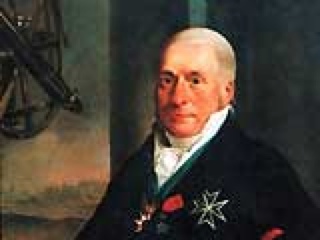 Engineer Kraijenhoff Engineer Kraijenhoff
Cornelis Rudolphus Theodorus Kraijenhoff (1758-1840) was of great influence on the Dutch defences during the French occupation. To his design a defence line was constructed north of Amsterdam in 1799, to counter a landing by English and Russian troops. Most of the defence line consisted of inundations, almost the same area as the later Defence Line of Amsterdam. From 1805-1810 he built the first circular defence line of Amsterdam, now called 'Posts of Kraijenhoff'. |
Kingdom of The Netherlands (1813 - 1914) |
| |
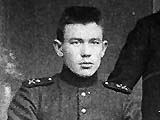 Fort watchman Alberts Fort watchman Alberts
Harm Alberts Sr. (1894-1977) is linked very closely to the Fort along Pampus: his father was involved during the construction and during the Great War, he himself served as a soldier at the fort island. After several posts in the army, he returned in 1929 to the fort island as the last fort watchman until 1933. He was then assigned to the army unit for the ammunition storage and distribution and stationed at the Central Defence Depot. |
| |
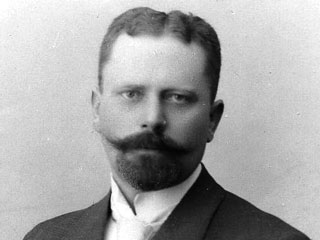 Painter Cleve Painter Cleve
Richard Cleve (1860-1936) was born at Schloss Lekow in Germany, now Poland.
After his conscription and law study, he aspired to be an artist. He came to an artists colony in Volendam and lived in the town of Velsen.
In 1897 there was a suspicion he was a Germany spy with interest in the forts. As far as we know these suspicions never went into a stage of hearings and indictment. Richard probably never knew about the suspicions but now he is an early example of the suspiciousness of the population with a apogee in the First World War.
He married in 1900, they bought Cannenburch castle in 1906 and exploited it as hotel-restaurant.
Richard died in 1936 and was
buried in the town of Vaassen. After the Second World War the castle was confiscated as German property. His wife died in 1958 and was buried in Berlin. |
| |
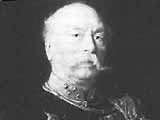 Minister of War Den Beer Poortugael Minister of War Den Beer Poortugael
Jacobus Catharinus Cornelis den Beer Poortugael (1832-1913) held multiple positions at the Ministry of War and the General Staff after studying at the military academy. In 1879 he became Minister of War and had some influence on the finishing of the New Dutch Waterline. He was also the Commander of the Defence Line between 1889 and 1891.
He was one of the first persons to understand the importance of international law and represented The Netherlands during the two Peace Conferences in The Hague in 1899 and 1907. |
| |
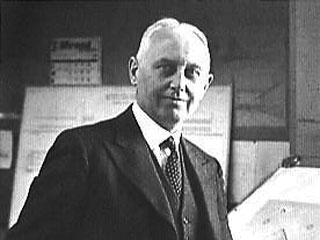 Engineer Dudok Engineer Dudok
Willem Dudok (1884-1974) graduated as officer in the Engineer Corps in 1905. Between 1910 and 1913 he was fort-constructor and probably involved with the construction of Fort along the Drecht, Fort near Uithoorn, Fort Waver-Amstel and Fort along Middenweg.
In 1913 he became an civilian architect and he played an important role in a new architectural style. |
| |
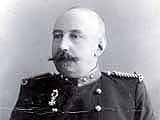 Defence Line Commander Fabius Defence Line Commander Fabius
Arnoldus Nicolaas Jacobus Fabius (1855-1921) started his military career in 1896 and was ultimately promoted major-general in 1911 when he was appointed Defence Line commander. He was still serving in this role when he retired in 1912. As a writer of historically based books and plays, he was well known by the general public. He was decorated three times by the Dutch Queen and once by the French president for his achievements. |
| |
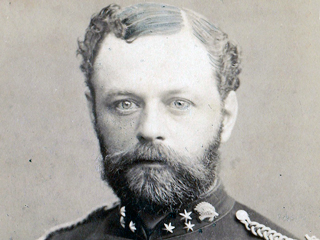 Engineer Hioolen Engineer Hioolen
Leendert Hioolen (1846-1897) became officer in the Engineers Corps and worked from around 1870 until 1886 in the Defence Line. Specifically the fortress Weesp and Muiden were he and his family lived and were he must have been involved with the improvements of these fortresses and nearby forts. Both his sons laid the first stones of two military buildings in Muiden, see Toddler Hioolen. |
| |
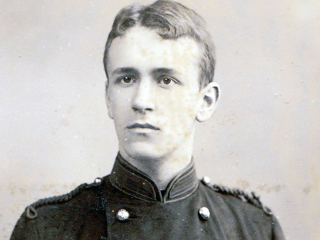 Toddler Hioolen Toddler Hioolen
Henk Hioolen (1871-1934) was born in Weesp as the second son of Leendert Hioolen. At the age of 4 he laid the first stone of the bombproof barracks at Fortress Muiden.
Like his dad he became officer in the Engineers Corps also but for the army in the Dutch East Indies (now Indonesia) from 1895 until 1899.
From 1899 until 1921 he worked with the Dutch Indies Railroad Company. |
| |
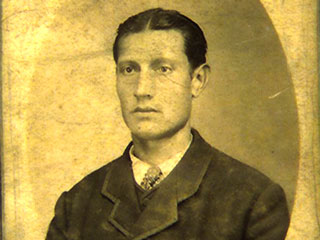 Labourer Verhoeven Labourer Verhoeven
Adrianus Verhoeven (1864-1949) was an illiterate labourer who worked with a shovel and wheelbarrow at the earthworks of several forts. This was somewhere between 1893 and 1897. According to oral history, his wife washed and cooked for a group of labourers who were housed close to the fort they were working on. |
|
 Queen Wilhelmina Queen Wilhelmina
Wilhelmina Helena Pauline Maria van Oranje Nassau (1880-1948) is mostly known for her reign in exile in London during the Second World War. She was heavily involved in the defence and foreign relations of her Kingdom which presented a policy of neutrality to a politically unstable Europe. |
First World War (1914 - 1918) |
| |
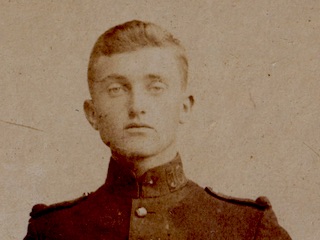 Soldier Cornelissen Soldier Cornelissen
Wilhelmus Jan Cornelissen (1892-1967) was enlisted in 1912 as infantry man.
Although living within the Defence Line, because of his young age, he was not assigned
to it. Instead he guarded the border with German-occupied Belgium under primitive circumstances. This was at least from August 1914 untill June 1917 near the town of Valkenswaard. |
| |
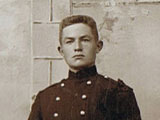 Gunner Eckhart Gunner Eckhart
Jan Eckhart (1884-1958) was drafted as gunner in 1904. During the mobilisation of 1914 he was artillery gunner at the Fort near Velsen. |
| |
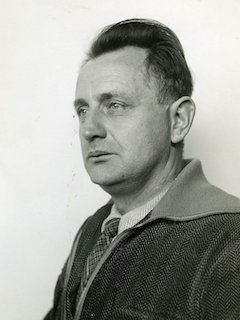 Soldier Elzinga Soldier Elzinga
Johannes (Johan) Elzinga was born on December 5th, 1893 and enlisted around 1912.
When mobilized in 1914 he was part of de border-patrols. Because of his artistic talent he was transferred to Amsterdam in order to attend the Arts School in Amsterdam. Based in the memoires of Luitenant Rang he was stationed at Fort North of Spaarndam and painted landschapes and portraits.
After demobilisation he returned to his hometown and became a succesfull painter. Het died on March 18th, 1969 at the age of 75 years. |
| |
Prisoner Förrer
Jan Förrer was born in 1925 and was 14 years old during the German invasion of the Netherlands in May 1940. He was anti-Nazi until he worked at a flowershop ran by two brothers who were member of the Dutch national-socialist party. He became member in 1942. He voluntary joined the German Schutzstaffel (SS) in 1943. His unit was assigned to Croatia en Ukraine. He got wounded during a siege by 'Russians' and recovered a couple of months and assigned to an vehicle-maintenance unit. When the 'Russians' marched into Germany, he was assigned to a fighting unit which was obliterated in May 1945.
He fled to the American sector and tried to earn a living and evaded arrest by the Americans and deportation to The Nederlands for 10 months. He was imprissoned at Kamp Fallingbostel and brought to Camp Fort Honswijk in The Netherlands and consecutive camps. Somewhere after October 9th 1946 until April 14th 1947 he was held in Camp Fort Spijkerboor where he made a few but unknown murial paintings.
He was released on Februari 1st 1949 and became a succesfull artist. At 67 years old he died in 1993. |
| |
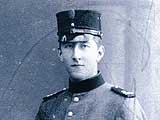 Gunner Gaveel Gunner Gaveel
Robert Hanry Gaveel (1894-1965) was drafted as gunner for the fortress artillery in early 1914 but first exercise was planned for early 1915. Because of the outbreak of the Great War he was enrolled in august 1914. Amongst other positions he served as gunner and gun-commander at Fort near Uithoorn. |
| |
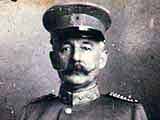 Group Commander De Grave Group Commander De Grave
Jean Louis de Grave (1862-1945) served in the East-Indies Army between 1884 and 1910 when he retired. During the mobilisation of 1914 he enlisted as a volunteer. He was assigned the function of commander of the Group Westzaan of the Sector Zaandam until 1919. |
| |
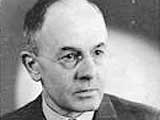 Soldier Groennou Soldier Groennou
Henk Groennou (1885-1963) was first drafted for army conscription in 1905. The locations where he served, as an infantry soldier, during the Great War are unknown. From his it is only known he was at Fort Waver-Amstel in august 1915. |
| |
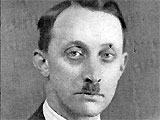 Fort Commander Hospers Fort Commander Hospers
After his study at a textile school Gerard Hospers (1895-1952) was drafted for army conscription in 1912-1913. He worked shortly at the textile factory of his father when he became commander of Fort along Den Ham during de Great War.
Back to civil live he became president of a textile company until his death in 1952. |
| |
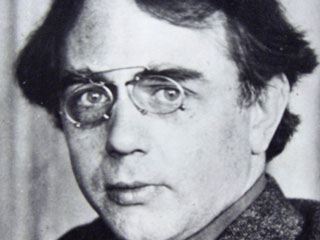 Sergeant A.M. de Jong Sergeant A.M. de Jong
Adriaan de Jong (1888-1943) was drafted late during the WO1 mobilisation, initially at the Entos Area.
He published anonymously about military live and made a mockery of the higher ranks.
After WO1 he became a well known writer. He was killed by Dutch Nazi's in WO2 as reprisal for an unsuccessful murder by Dutch resistance. |
| |
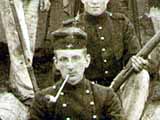 Sergeant W. de Jong Sergeant W. de Jong
Willem de Jong (1886-1978) was an office clerk who was first drafted for army conscription in 1906. Between 1914 and 1918, he served as a infantry sergeant at Fort north of Purmerend. As he told his family, he had several soldiers who later became writers, scientists and artists but who were as a soldier, "disorderly". |
| |
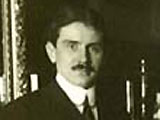 Soldier Kortenhorst Soldier Kortenhorst
Louis Kortenhorst (1844-1966) was drafted for army conscription in 1908. During the Great War he was infantry soldier at Fort south of Spaarndam. As an trained artist he drew portraits of his fellow soldiers and he also made 12 wall paintings which are still present. |
| |
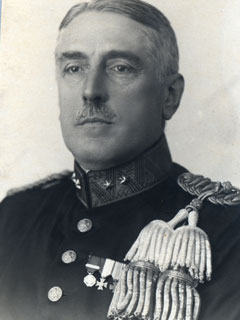 Aide-de-Camp Van Linden Tol Aide-de-Camp Van Linden Tol
Paul van Linden Tol (1872-1945) joined the army voluntarily and studied for officer between 1890 and 1894. He served in the Dutch East-Indies and fought in several conflicts with the natives.
In 1904 he returned to The Netherlands and became officer at the Defence Line of Amsterdam staff.
He served under Commander Ophorst during the First World War.
In 1919 he became infected by Spanish Flu and requested early retirement. He died during the Second World War because of illness and war wounds. |
| |
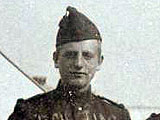 Corporal Muller Corporal Muller
Jan Muller (1893-1960) was first drafted for army conscription in 1913. Assigned to the fort artillery he was stationed in the Orange Nassau Barrack. Based on a few postcards he sent home, he was trained in Artillery Shooting School. Between 1914 and 1919 he served at Fort Waver-Amstel and was promoted to corporal. |
| |
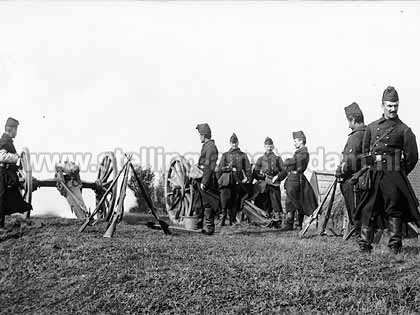 Sergeant Olie Sergeant Olie
Jacob Olie jr. (1879-1955) signed a six year voluntary contract with the Army. It started at the same time as his conscription on 12 June 1899 with the first exercise. His voluntary contract was extended twice and finished in 1907.
He worked in the fortress artillery including the first year of the First World War mobilisation but there is no certainty in which forts he encamped.
His father was one of the earliest photographers in The Netherlands and he took several pictures of the exercises his son participated in. |
|
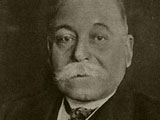 Defence Line Commander Ophorst Defence Line Commander Ophorst
Adrianus Rutger Ophorst (1857-1928) started his military career in 1885. After climbing the ranks he was Defence Line commander from 1913 to 1918. Which means he was the commander with the largest number of troops because of the mobilisation of 1914-1919.
For his achievements he was decorated two times by the Dutch Queen. |
| |
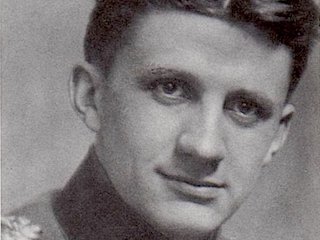 Reserve 1st Lieutenant Rang Reserve 1st Lieutenant Rang
Lolke Rang (1893-1963) volunteered in 1912 to become a reserve officer. During his third term the mobilisation 1914-1919 was proclaimed and he stayed in service until 1919.
He was an artillery-officer and served in Fort near Veldhuis, then two headquarters for artillery outside the forts and the group headquarter in Halfweg. The longest stay was as second-in-command at Fort north of Spaarndam.
His memories of the trainings and mobilisation he wrote down in a few copybooks, which are the largest personal written legacy of the Defence Line of Amsterdam. |
| |
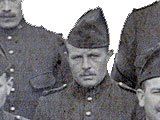 Soldier Schilperoord Soldier Schilperoord
Zeger Schilperoord (1890-1963) was born 90 kilometres from Fort near Marken-Binnen where he was stationed as a drafted soldier during the mobilisation of 1914.
He met Trijntje Bakker, the daughter of a local windmill operator, with whom he married in 1915. He lived and worked his whole life in and around the town of Krommeniedijk. |
| |
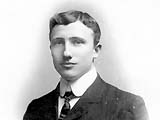 Soldier Schutte Soldier Schutte
Bernhard Schutte (1885-1951) was first drafted for army conscription in 1905. Between 1914 and 1918, he served as a infantry soldier at Fort near Marken-Binnen. |
| |
Fort commander Segov
Jan Paul Willem Segov (1868-1935) was born and raised in the Dutch colony Dutch East-Indies, as a son of a Major General infantry. Age 16 in 1885 he became a soldier and participated in several military operations agains uprisings of the inhabitants. In 1907 he retired as captain and moved to The Netherlands.
At the start of the mobilsation in August 1914 he voluntered and became the fort commander
of Fort near Uithoorn. Which he formally stayed until July 1919 but may have been sent on leave before. |
| |
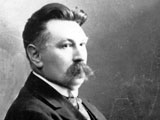 Corporal Thijssen Corporal Thijssen
Theo Thijssen (1879-1943) was a teacher and first drafted for army conscription in 1899. From the start of the mobilisation in August 1914 until June 1915 he was a gunner at Fort near Uithoorn.
Before the war he published his first novels and became a successful writer and had a great influence on the educational system also. |
| |
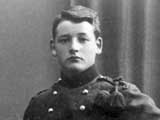 Gunner Tilburgs Gunner Tilburgs
Cor Tilburgs (1890-1977) was drafted as gunner for the armoured fort artillery in early 1910. During the Great War he was stationed from 1914-1915 at Fort along Pampus. Until may 1917 he was stationed at other locations in the Defence Line. |
| |
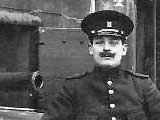 Gunner De Vries Gunner De Vries
Jan de Vries (1893-1987) was drafted for the fortress artillery in 1913. During the Great War he served as gunner at Fort near Penningsveer for three years. |
Interbellum (1918 - 1939) |
|
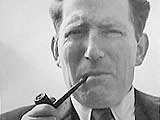 Prisoner De Man Prisoner De Man
Salomon Herman Hamburger (1898-1946) supported the socialist and anarchistic movement and was a pacifist. Therefore he refused military service and was imprisoned from February 1918 until January 1919. From July until November 1918 he was prisoner at Fort near Spijkerboor. Later on he became a famous Dutch writer under the pseudonym Herman de Man which became his official name. |
| |
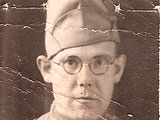 Engineer Kamstra Engineer Kamstra
Nicolaas Hendrikus Josef Kamstra sr. (1907-1947) studied to become an military engineer and worked probably on building casemates elsewhere in the 1920's en 1930's. His war-destination was Spaarndam were he was stationed during the mobilisation in august 1939. |
Second World War (1939 - 1946) |
| |
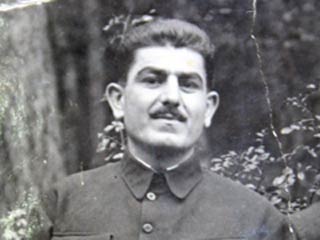 Soldier Asanisjvili Soldier Asanisjvili
Arsen Iljitsj Asanisjvili was born in 1911 in the town Kvemo Matsjchaan, Georgia.
On June 23rd 1941, a day after the German invasion of the Soviet Union, he was enlisted by the Red Army.
He was captured by German troops in early 1942 and they treated prisoners very badly.
He accepted to join the Georgisches Infanterie-Bataillon 822 in German service and was put to work at Fort along the St. Aagtendijk, which was used as a munition depot.
Arsen and 14 comrades were murdered on April 20th 1945 by German soldiers because of theft combined with the uprising of Georgian solders elsewhere and alcohol use because of Hitlers birthday.
Arsen was eventually buried on the fort and reburied at the Russian Field of Honour in Leusden. His daughter Dali (1942-2020) visited his grave in 2012 for the first time, thanks to the Foundation Russian Field of Honour. |
| |
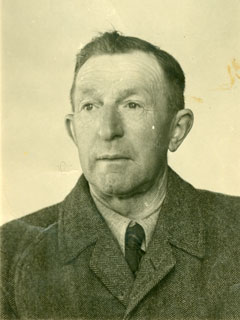 Prisoner Beers Prisoner Beers
Jan Beers (1888-1956) was an inmate of the prison at Fort near Spijkerboor in 1943. As a bargeman transporting vegetables to the auction, he was caught with food for the black market. He was sentenced three weeks in a open prison. Upon return his wife burned his cloths to get rid of the flees and lice. |
| |
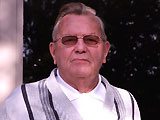 Prisoner Van Berge Prisoner Van Berge
The father of Dirk van Berge (1927-2017) was initially impressed by the way Germany confronted the economic crisis. After the Germany invasion in May 1940, he sent his son, from September 1940 until December 1941, to the German school in Amsterdam via which his son became member of the Nazi youth club and brought leaflets to home.
After the liberation, both Dirk (17yrs) and his father were arrested and Dirk spent two months of his seven month imprisonment at Fort north of Purmerend, his father two months longer. He was badly treated and ultimately his case was closed without trial. |
| |
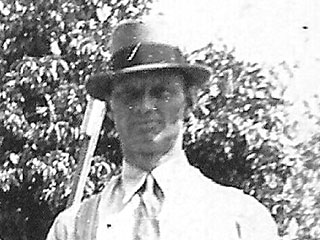 Fort watchman Pijl Fort watchman Pijl
Marinus Adolph Pijl (1894-1945) became a voluntary soldier in the Dutch colony Dutch East-Indies in 1912. Het got two sons with the native woman Anna. The family moved to The Netherlands in 1933.
He became fort watchman at Fort near De Kwakel in 1935. With his two sons he was arrested by the occupying German army because of extortion and theft of grain for an illegal liquor distillery. While imprisoned in Amsterdam, all three were executed as reprisal of Dutch resistance actions. |
| |
 Fort watchman Reinderts Fort watchman Reinderts
Fred Reinderts (1900-1969) worked briefly in the merchant shipping. At least in 1924 he worked as cook with the Royal Navy. After the German invasion in May 1940 he was unemployed and became the keeper of Fort in the Botshol in 1942. As a member of the resistance he was involved in unknown local operations and hiding wanted people. In June 1945 the family returned to Amsterdam and Fred returned working for the Navy. |
| |
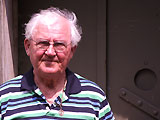 Soldier Vonk Soldier Vonk
Klaas Vonk (1928-2019) was drafted for army conscription in 1948. He was trained for fighting in de Dutch East-Indies colony (now Indonesia) where an independence war had started.
But he refused to be shipped to the Indies and was sentenced to 14 months imprisonment, of which he spent 5 months at Fort near Spijkerboor. |
Cold War (1946 - 1991) |
| |
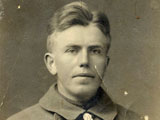 Fort watchman Algra Fort watchman Algra
Born in 1900, Hendrik Algra was conscripted in 1920 with the infantry.
He voluntary joined the Military Police late 1920 until he was fired early 1925 because of marrying without permission.
He became hospital servant in the Military Hospital in Utrecht. Due to mental problems he became fort watchman at Fort near Hinderdam in 1936. He took his own life on this fort in late 1945. |
| |
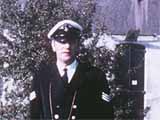 Official Berkhof Official Berkhof
Jan Berkhof (born 1927) was a civil official attached to the Dutch Royal Navy. Between 1950 and 1970, he was one of the guards patrolling five forts which were used as ammunition storage depots by the navy. Later he was a guard at the Naval Station Kattenburg in Amsterdam. |
| |
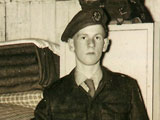 Soldier Van Dam Soldier Van Dam
Gerrit van Dam (1938-2016) was a conscripted soldier who had his first military training for four months in Camp Zeeburg on the outskirts of Amsterdam. |
| |
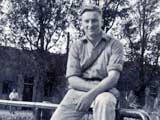 Soldier Heijkoop Soldier Heijkoop
Wim Heijkoop (1926) started his military conscription in November 1946. After a basic training near Arnhem he was assigned to a unit to provide food to the troops in the province of North-Holland. Initially in a factory building near Haarlem, the depot moved to Fort near the Liebrug where the personnel also stayed. He left the army in December 1948. |
| |
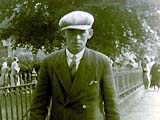 Fort watchman Van den Hoven Fort watchman Van den Hoven
Frans van den Hoven (1903-1992) was the keeper of Fort near De Kwakel from 1946 until 1968. The fort was used for the storage of ammunition and related materials. Having organized a conveyor belt to move the materials he had enough time to earn some money illegally with his previous profession of cattle keeper. |
| |
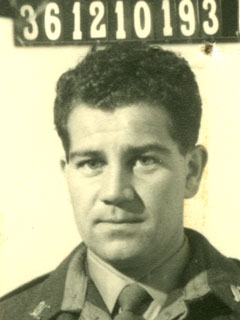 Soldier Van Kampen Soldier Van Kampen
Leo van Kampen (1936-2015) was conscripted with the Royal Dutch Airforce in 1956. After his basic training he worked in the canteen of the Soesterberg Airbase.
From July 1957 until June 1958 he worked at Fort near Hoofddorp which was in use by the airforce as a depot, related to wartime use of the nearby Schiphol Airfield.
He maintained the weapons, tools, barbed wire etc. stored at the fort. |
| |
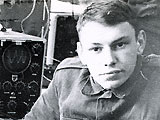 Corporal Kuiper Corporal Kuiper
Gerard Kuiper (1938-1993) served his military conscription with the Royal Netherlands Air Force in 1959-1960.
After training as a radio-operator he manned the beam-antenna at Fort near Spijkerboor from June 1959 until June 1960 (supervised by Radio technician Pennekamp). He started the training as pilot but didn't fully qualify. |
| |
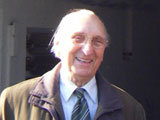 Ammunition technician Meerhof Ammunition technician Meerhof
Jaap Meerhof (1925-2017) was Military Police member from 1945 until 1951.
Following this he went on a 3 year course for ammunition technician.
He then became the commander of a disassembly depot for old munition at Fort along Nekkerweg from 1953 until 1955.
Then until his retirement in 1981 he was munition researcher and tester at the former Sector depot Sloten, Ammunition Division. |
| |
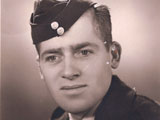 Radio technician Pennekamp Radio technician Pennekamp
Piet Theodorus Pennekamp (1930-2015) started in 1954 with a six year contract with the Royal Netherlands Air Force. He was trained as radio technician for the microwave transmission system.
One of the antenna locations was at Fort near Spijkerboor were he worked from 1958 until 1966. With a colleague he supervised conscripted technicians (i.e. Corporal Kuiper) to maintain the transmitter together. Piet lived with his wife and newly born daughters in a barrack on the site. He retired in 1985 and died in 2015. |
| |
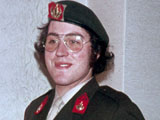 Sergeant Wools Sergeant Wools
Dick Wools (*1953) served his military conscription with the 420 Infantry Guards Company "Van Heutsz", based at the Orange Nassau Barrack in Amsterdam.
From May 1975 until April 1976 he was patrol commander of a unit which went on nightly patrols to forts and other depots. |